How Do I Sell My Commercial Property? A Step-by-Step Guide for Property Owners
A step-by-step guide for commercial property owners covering valuation, preparation, broker selection, marketing, offers, due diligence, and closing.
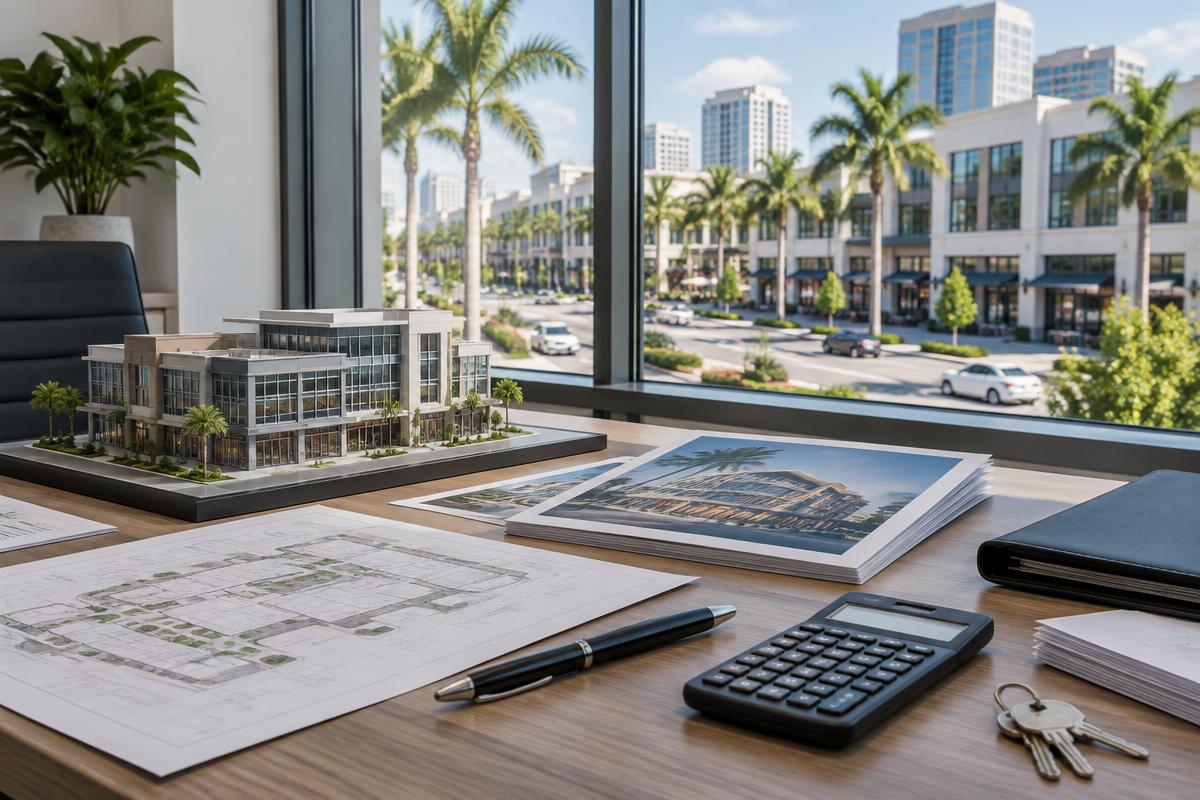
Selling commercial real estate involves more than putting a property on the market and waiting for a buyer. A successful commercial property sale typically requires property valuation, financial analysis, pricing strategy, preparation of property information, professional marketing, buyer outreach, offer negotiation, due diligence and closing coordination.
If you are asking, “How do I sell my commercial property?”, a practical process is:
- Understand your reason and objectives for selling.
- Determine the property's potential market value.
- Gather the property's financial and operating information.
- Choose an experienced commercial real estate broker.
- Establish an asking price and marketing strategy.
- Prepare professional marketing materials.
- Market the property to qualified buyers and investors.
- Evaluate and negotiate offers.
- Complete buyer due diligence.
- Satisfy contractual and closing requirements.
- Close the transaction.
The exact process depends on the type of commercial property, whether it is occupied or vacant, its financial performance, existing leases, physical condition, location and current market conditions.
Step 1: Define Your Objectives Before Selling
Before listing a commercial property, determine what you want to accomplish.
Some owners want to maximize the sale price. Others prioritize speed, confidentiality, certainty of closing or the ability to coordinate the sale with another investment.
Important questions include:
- Why are you selling?
- Is there a specific timeframe?
- Do you have an existing mortgage?
- Is the property occupied or vacant?
- Will existing tenants remain after the sale?
- Are you considering a 1031 exchange?
- Do you plan to reinvest the proceeds?
- Is confidentiality important?
- Would you consider seller financing?
- Are there partnership or ownership issues that need to be addressed?
These decisions can influence pricing, marketing and negotiations.
Step 2: Determine What Your Commercial Property Is Worth
Before deciding what price to ask, the property should be evaluated based on relevant commercial real estate data.
Commercial property value may be influenced by:
- Recent comparable sales
- Current competing properties
- Rental income
- Operating expenses
- Net operating income (NOI)
- Capitalization rate
- Occupancy
- Tenant quality
- Remaining lease terms
- Rent increases
- Property condition
- Building and land size
- Zoning
- Location
- Parking and accessibility
- Development or redevelopment potential
- Current investor demand
- Interest rates and financing conditions
The appropriate valuation method depends heavily on the property.
Income-Producing Commercial Properties
For an income-producing property, investors often focus on net operating income and capitalization rate.
A simplified capitalization approach is:
Property Value = NOI ÷ Capitalization Rate
For example, if a property produces $300,000 in annual NOI and market evidence supports a 6% capitalization rate:
$300,000 ÷ 0.06 = $5,000,000
This is only a simplified example. Actual commercial property valuation can involve comparable sales, lease analysis, market rents, tenant credit, deferred maintenance, financing conditions and other factors.
Owner-Occupied or Vacant Commercial Properties
A property without stabilized investment income may be evaluated more heavily through comparable sales, price per square foot, replacement cost, location, physical characteristics, zoning and potential use.
A commercial property valuation or broker opinion of value can help an owner understand how the property may be positioned before listing it for sale.
Step 3: Gather the Information Buyers Will Need
Commercial real estate buyers typically require substantially more information than residential buyers.
Preparing documentation early can make the marketing and due diligence process more efficient.
Depending on the property, sellers may need:
- Current rent roll
- Existing leases and amendments
- Operating statements
- Property tax information
- Insurance expenses
- Utility expenses
- Maintenance expenses
- CAM reconciliations
- Service contracts
- Surveys
- Site plans
- Floor plans
- Environmental reports
- Roof or building reports
- Certificates of occupancy or use
- Zoning information
- Permits
- Capital improvement history
- Property management information
Not every document should necessarily be distributed publicly.
Sensitive financial information can be provided to qualified buyers at the appropriate stage of the transaction, potentially after confidentiality requirements are satisfied.
Step 4: Choose a Commercial Real Estate Broker
For owners who do not want to manage the entire process themselves, a commercial real estate broker can handle much of the real estate side of the transaction.
When selecting a broker to sell commercial property, consider:
- Experience with commercial real estate
- Knowledge of the property's market
- Experience with your property type
- Understanding of valuation
- Marketing strategy
- Quality of marketing materials
- Access to buyers and investors
- Commercial listing platform exposure
- Direct investor outreach capabilities
- Broker network
- Negotiation experience
- Communication and reporting
- Due diligence and transaction coordination
A broker should be able to explain how the property will be priced, positioned, marketed and presented to prospective buyers.
For commercial property owners in Miami and South Florida, Lais Same of Floridian First Realty provides commercial property sales and listing representation across multiple commercial real estate asset classes.
Step 5: Establish the Right Asking Price
Pricing is one of the most important decisions in a commercial property sale.
Setting the price too low can leave money on the table.
Setting it significantly above what the market supports can reduce buyer interest, extend the marketing period and potentially create the perception that something is wrong with the property after it remains available for an extended period.
The asking price should be supported by relevant factors such as comparable sales, property income, NOI, market cap rates, lease structure, property condition, location, current competition and investor demand.
The goal is not simply to choose the highest possible asking price.
The goal is to establish a pricing strategy that appropriately positions the property within the current market while supporting the owner's objectives.
Step 6: Prepare the Property for Sale
Commercial property preparation is different from residential staging.
Depending on the asset, preparation may include:
- Correcting obvious deferred maintenance
- Cleaning common areas
- Improving exterior presentation
- Updating signage
- Organizing leases and financial statements
- Resolving open permits when appropriate
- Reviewing code or zoning issues
- Obtaining updated property photographs
- Preparing accurate property measurements
- Organizing tenant information
- Identifying recent capital improvements
Not every property needs major improvements before being sold.
In some cases, the better strategy may be to sell the property in its existing condition and price it accordingly.
Step 7: Create Professional Commercial Property Marketing
A strong commercial real estate marketing package should give potential buyers enough information to quickly understand the opportunity.
Depending on the property and marketing strategy, this can include:
- Professional photography
- A commercial property flyer
- Offering Memorandum
- Property description
- Investment highlights
- Location overview
- Maps
- Demographic information
- Site plans
- Rent roll
- Financial summary
- NOI
- Asking price
- Cap rate when appropriate
- Tenant information
- Development information
- Contact information
For investment properties, the presentation should help an investor quickly understand what the property is, how it generates income, what is being offered and why the opportunity may deserve further investigation.
Step 8: Market the Property to Buyers and Investors
Selling commercial real estate should normally involve more than uploading the property to one website.
Depending on the property and confidentiality requirements, marketing may include:
- Commercial real estate listing platforms
- Brokerage websites
- Commercial MLS systems where applicable
- Email marketing
- Direct investor outreach
- Broker-to-broker marketing
- Buyer databases
- Property signage
- Digital advertising
- Social media
- Direct outreach to nearby property owners
- Outreach to developers
- Institutional or private investors
- Local and out-of-market buyers
The target buyer depends on the property.
A shopping center, multifamily building, development site and owner-user office building can each require a different buyer outreach strategy.
Should I Sell My Commercial Property Off-Market or Publicly List It?
There is no universal answer.
A publicly marketed commercial property generally receives broader exposure to buyers, investors and commercial brokers. Broader exposure can help the market discover the property and potentially create competition among buyers.
An off-market sale provides greater confidentiality and more controlled distribution of property information. This can be useful when ownership does not want tenants, employees, customers or the broader market to know that a sale is being considered.
Some transactions can also use a targeted marketing approach that falls between the two.
The appropriate strategy depends on the property, owner objectives, confidentiality requirements and likely buyer pool.
Step 9: Qualify Prospective Buyers
An offer price is important, but it is not the only consideration.
Before accepting an offer, a seller should understand whether the buyer appears capable of completing the transaction.
Depending on the deal, relevant information may include:
- Proof of funds
- Financing plans
- Lender involvement
- Equity available
- Commercial real estate experience
- Proposed due diligence period
- Financing contingency
- Deposit
- Closing timeline
- Requested seller concessions
A slightly lower offer with strong financial capacity and favorable terms can be materially different from a higher offer with significant contingencies and uncertainty.
Step 10: Compare and Negotiate Commercial Property Offers
Commercial property offers should be evaluated as a complete package.
Important terms can include:
- Purchase price
- Earnest money deposit
- Additional deposits
- Due diligence period
- Financing contingency
- Closing date
- Property condition
- Inspection rights
- Assignment rights
- Requested seller credits
- Existing tenant obligations
- Closing costs
- Personal property included
- Seller financing
- 1031 exchange cooperation
- Conditions to closing
The highest offer is not automatically the strongest offer.
The seller and appropriate advisors should evaluate the price, terms, contingencies and likelihood of closing together.
Step 11: Enter Into a Purchase and Sale Agreement
Once the parties agree on the major business terms, those terms are documented in an appropriate purchase and sale agreement.
Commercial real estate contracts can create significant legal and financial obligations.
A commercial real estate attorney can advise the seller regarding contract language, representations, warranties, default provisions, due diligence, deposits, title matters and closing obligations.
A commercial broker negotiates and coordinates the real estate transaction but should not replace the seller's attorney, accountant or tax professional.
Step 12: Buyer Due Diligence
After the property is under contract, the buyer typically conducts due diligence.
Depending on the property, this may include:
- Physical inspections
- Roof inspection
- HVAC systems
- Electrical and plumbing
- Environmental assessment
- Survey
- Title
- Zoning
- Permitted use
- Leases
- Tenant estoppels
- Rent roll
- Operating expenses
- Property taxes
- Insurance
- Service contracts
- Building permits
- Code compliance
- Financial performance
For income-producing real estate, buyers commonly verify whether the property's actual financial performance supports the assumptions used when making the offer.
Step 13: Appraisal and Financing
When the buyer is financing the acquisition, the lender may require an appraisal and additional property documentation.
Financing can affect the transaction timeline because the lender may need to review:
- Appraised value
- Property condition
- Environmental matters
- Income
- Existing leases
- Borrower financial information
- Insurance
- Title
- Other underwriting requirements
Sellers should understand the buyer's financing structure before agreeing to unrealistic closing deadlines.
Step 14: Prepare for Closing
Before closing, the parties and their professionals work to satisfy the remaining contractual requirements.
This may include resolving title matters, completing lender requirements, obtaining estoppels, finalizing closing statements, confirming prorations, transferring documents and completing a final property walkthrough when applicable.
At closing, ownership transfers to the buyer and sale proceeds are distributed according to the closing documents.
How Long Does It Take to Sell a Commercial Property?
There is no standard timeline.
A commercial property can take several months or longer to sell depending on:
- Property type
- Asking price
- Location
- Income
- Occupancy
- Tenant quality
- Property condition
- Financing environment
- Buyer demand
- Due diligence
- Complexity of the transaction
The marketing period and the time from contract to closing are also separate.
A property might receive an acceptable offer relatively quickly but still require substantial time for due diligence, financing and closing.
How Much Does It Cost to Sell Commercial Property?
Selling expenses vary significantly by property and transaction.
Potential expenses may include:
- Commercial real estate brokerage commission
- Attorney fees
- Title-related expenses
- Closing costs
- Property reports or inspections
- Survey expenses
- Loan payoff costs
- Prepayment penalties, when applicable
- Repairs or negotiated credits
- Taxes
- Other transaction-specific expenses
The allocation of expenses can also be negotiated in the purchase agreement and can vary by market practice.
Property owners should request an estimated seller net sheet or closing-cost analysis when appropriate.
What Happens to Existing Tenants When I Sell My Commercial Property?
Selling a leased commercial property does not necessarily mean the tenants leave.
In many investment sales, the existing leases are part of what the buyer is purchasing.
Buyers may evaluate:
- Rental rates
- Lease expiration dates
- Renewal options
- Rent increases
- Security deposits
- Tenant credit
- Expense reimbursements
- Exclusivity rights
- Options to purchase
- Termination rights
- Other lease obligations
For an income-producing commercial property, strong leases and reliable tenants can materially affect investor interest and valuation.
Can I Sell Commercial Property With a Mortgage?
Yes. Commercial property can generally be sold while an existing mortgage remains outstanding.
The loan is typically addressed as part of the closing process, which may involve paying off the outstanding balance from the sale proceeds.
However, commercial loans may contain prepayment penalties, defeasance requirements or other provisions that can affect the economics of a sale.
Owners should review their loan documents and obtain current payoff information before making major assumptions about expected net proceeds.
Can I Sell Commercial Property With Vacancies?
Yes.
Vacancy does not prevent a commercial property from being sold, but it can affect value and the target buyer.
An investor may evaluate the cost and time required to lease the vacant space.
An owner-user, however, may view vacancy positively because it creates space for the buyer's own business.
This is another reason the marketing strategy should be based on the property's actual circumstances rather than using the same approach for every commercial listing.
Should I Sell My Commercial Property Before a Lease Expires?
It depends.
A long-term lease with a strong tenant may make an investment property attractive to buyers seeking predictable income.
In other situations, an upcoming lease expiration may create an opportunity for an owner-user, redevelopment buyer or investor who believes rents can be increased.
The effect on value depends on the tenant, rent, market rental rates, lease terms, property type and likely buyer.
Can I Use a 1031 Exchange When Selling Commercial Property?
Potentially, yes.
If the commercial property is qualifying real estate held for investment or productive use in a trade or business, the owner may be able to use a Section 1031 like-kind exchange to defer recognition of qualifying gain when acquiring eligible replacement real property.
A 1031 exchange has strict timing and structural requirements, including a general 45-day replacement-property identification period and 180-day exchange period in a typical deferred exchange.
Owners considering a 1031 exchange should speak with a qualified intermediary and tax professional before the property being sold closes.
How Do I Find Buyers for My Commercial Property?
Finding commercial real estate buyers requires identifying who is most likely to purchase the specific asset.
Potential buyers may include:
- Local investors
- Private investors
- Family offices
- Commercial property owners
- Owner-users
- Developers
- 1031 exchange buyers
- Institutional investors
- Regional investment groups
- Buyers represented by other commercial brokers
A commercial listing broker can combine public market exposure with targeted outreach to buyers who are more likely to have an interest in the property's asset class, location, price range and investment profile.
How Can a Commercial Real Estate Broker Help Me Sell My Property?
A commercial real estate broker can manage much of the real estate process from initial valuation through closing.
Depending on the assignment, services can include:
Property valuation → pricing strategy → listing preparation → professional marketing → buyer and investor outreach → showing coordination → offer analysis → negotiations → due diligence coordination → closing support.
For property owners in Miami and South Florida, Lais Same is a commercial real estate broker with Floridian First Realty providing commercial property sales and listing representation for owners considering the sale of commercial and investment real estate.
Representation includes properties such as multifamily, shopping centers, strip centers, mixed-use properties, retail, office, investment properties, commercial land and development opportunities.
Frequently Asked Questions About Selling Commercial Property
What is the first step in selling a commercial property?
The first step is usually understanding the property's current market position and potential value. This requires reviewing the property type, location, physical characteristics, income, expenses, leases, comparable sales and current market conditions before establishing a pricing and marketing strategy.
How do I know what my commercial property is worth?
Commercial property value can be estimated through comparable sales, income analysis, NOI, capitalization rates, lease analysis, property condition, location and current market conditions. The appropriate valuation method depends on whether the property is income-producing, vacant, owner-occupied or intended for redevelopment.
Do I need a commercial real estate broker to sell my property?
An owner is not necessarily required to use a broker, but commercial property sales can involve valuation, financial analysis, marketing, buyer qualification, negotiations, due diligence and closing coordination. A commercial listing broker can manage these components and market the property to potential buyers and investors.
How do I choose a commercial broker to sell my property?
Look for a broker with commercial real estate experience, knowledge of the local market and familiarity with your property type. Ask how the property will be valued, marketed and presented, which buyers will be targeted, where the property will be advertised and how offers and inquiries will be managed.
Should I get a commercial property valuation before selling?
Understanding the property's potential market value before listing can help establish an appropriate asking price and marketing strategy. The analysis may consider comparable sales, NOI, cap rates, rents, leases, occupancy, property condition and current market conditions.
Should I sell my commercial property off-market?
An off-market strategy may make sense when confidentiality is a priority or when a specific pool of potential buyers can be targeted. Public marketing generally provides broader exposure. The appropriate strategy depends on the property, market and owner's objectives.
How long does commercial property take to sell?
There is no fixed timeline. Commercial real estate may take several months or longer to sell depending on pricing, property type, location, income, condition, financing, market demand and the complexity of due diligence and closing.
Can I sell a commercial property that has tenants?
Yes. Many commercial investment properties are sold with existing tenants and leases in place. Buyers will typically analyze the leases, rent roll, income, tenant quality, lease expirations and operating expenses as part of their investment analysis.
Can I sell a commercial property with a mortgage?
Yes. An existing commercial mortgage can generally be paid from the sale proceeds at closing. Owners should review the loan for outstanding balances, prepayment penalties or other requirements that could affect net proceeds.
How do I market a commercial property for sale?
Commercial properties can be marketed through commercial listing platforms, offering memorandums, professional photography, digital marketing, investor databases, direct buyer outreach, broker networks, signage and targeted campaigns. The strategy should be customized to the property's likely buyer.
What documents do I need to sell commercial property?
Documents vary by property but may include leases, rent rolls, income and expense statements, tax records, surveys, title information, environmental reports, service contracts, permits, property plans and records of capital improvements.
Can I use a 1031 exchange after selling my commercial property?
Potentially. Qualifying investment or business real estate may be eligible for a Section 1031 like-kind exchange when applicable requirements are satisfied. Because important deadlines begin when the relinquished property is transferred, owners should consult their qualified intermediary and tax professional before closing the sale.
Ready to Sell a Commercial Property?
Selling commercial real estate starts with understanding what the property may be worth, who is most likely to buy it, how it should be positioned and how the opportunity will reach qualified buyers.
Property owners considering selling commercial real estate in Miami or South Florida can work with Lais Same, Commercial Real Estate Broker with Floridian First Realty, for commercial property valuation, sales and listing representation, marketing, buyer outreach, negotiations and transaction coordination.
Whether the property is a multifamily building, shopping center, strip center, mixed-use property, retail building, office property, investment property, commercial land or development opportunity, the sales strategy should be developed around the individual property and the owner's objectives.
Commercial Real Estate Broker Miami | Commercial Property Sales & Listing Representation | Commercial Property Valuation & Market Analysis | Commercial Real Estate Investment Sales | Commercial Properties for Sale | What Is a 1031 Exchange? | About Lais Same
Disclaimer: This article is provided for general educational and commercial real estate information. It is not legal, tax, accounting, financial or investment advice. Commercial property values, transaction costs, marketing periods and sale results vary by property and market conditions. Property owners should consult the appropriate legal, tax, financial and other professionals regarding their specific transaction.
Authoritative references for this topic
Primary government, regulatory and industry sources readers can consult directly. This article is educational and is not legal, tax, or investment advice.
- Like-Kind Exchanges — Real Estate Tax Tips (Section 1031) — U.S. Internal Revenue Service
- Instructions for Form 8824 — Like-Kind Exchanges — U.S. Internal Revenue Service
- Publication 544 — Sales and Other Dispositions of Assets — U.S. Internal Revenue Service
- Uniform Standards of Professional Appraisal Practice (USPAP) — The Appraisal Foundation
Lais Same
Lais Same is a commercial real estate broker serving Miami and South Florida, representing property owners, landlords, investors, buyers, and tenants in commercial property sales, leasing, investment transactions, valuation, and market analysis. Learn more about Lais Same or discuss a commercial property.
 Investment
What Is a 1031 Exchange? A Guide for Commercial Real Estate Investors
A practical guide to 1031 exchanges for commercial real estate investors, including eligible properties, strict deadlines, qualified intermediaries, replacement-property searches, and common mistakes.
 Buying
SBA 504 & SBA 7(a) Financing for Commercial Real Estate: A Guide for Business Owners
A practical comparison of SBA 504 and SBA 7(a) financing for owner-occupied commercial property, including equity, occupancy, eligible uses, and due diligence.
 Market Reports
Development Land in Miami Commercial Real Estate: A Complete Guide for Developers, Investors, and Business Owners
Learn what development land is, how it is evaluated, common commercial projects, and why Miami remains one of the nation's most active development markets.
Need advisory on a specific property or market?
Speak directly with Lais about your leasing, acquisition, or investment goals in South Florida.
Schedule a Consultation