CAP Rate Explained: An Important Number Every Commercial Real Estate Investor Should Understand
A clear guide to Capitalization Rate (CAP Rate) for commercial real estate investors — what it measures, how to calculate it, and why it should never be your only decision tool.
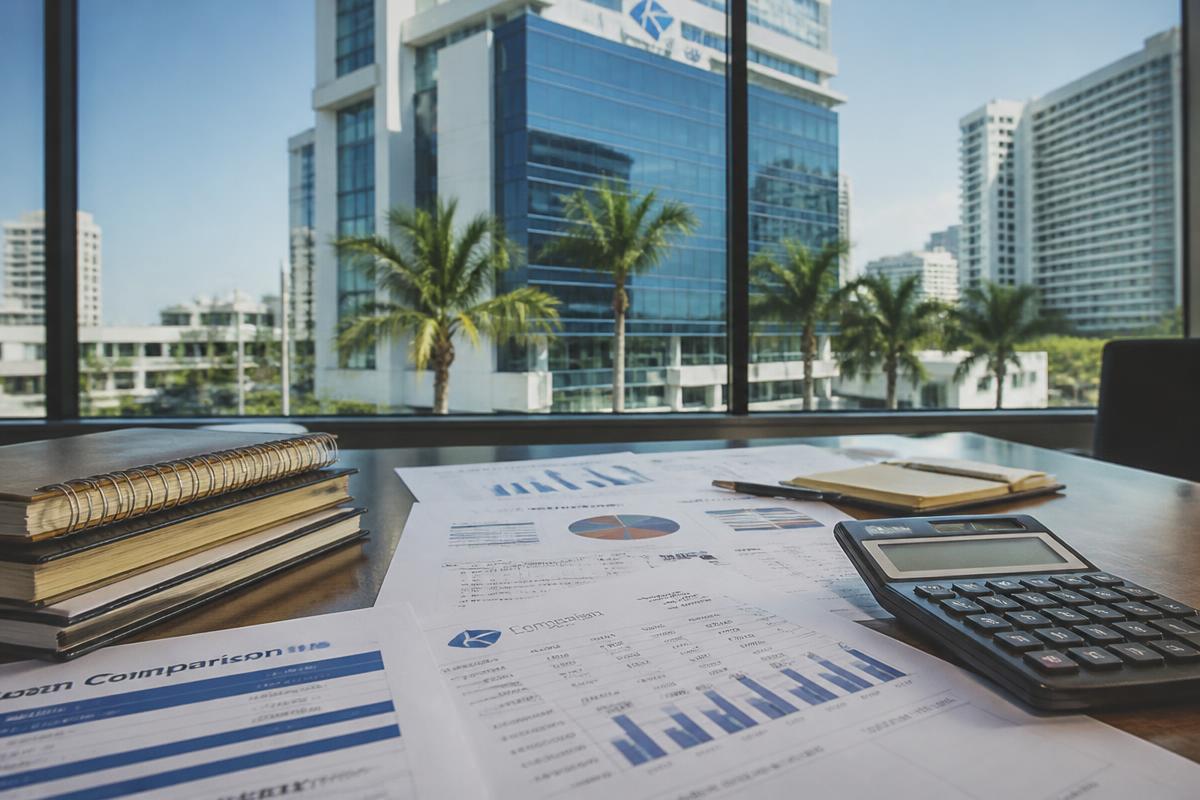
When investors begin exploring commercial real estate, one term appears almost immediately: CAP Rate. You'll see it on investment listings, hear brokers discussing it during property tours, and find it referenced in nearly every commercial real estate analysis. Yet despite how often it's used, many first-time investors misunderstand what it actually means.
Some assume that a higher CAP Rate automatically represents a better investment. Others believe it predicts how much money they'll earn each year. Neither assumption is entirely correct.
The truth is that the Capitalization Rate, commonly known as the CAP Rate, is one of the most valuable tools for evaluating income-producing real estate—but only if you understand how to interpret it properly.
Whether you're considering purchasing a retail shopping center, office building, warehouse, medical office, multifamily property, or mixed-use investment in Miami or anywhere else, understanding CAP Rates will help you compare opportunities, recognize value, and make more informed investment decisions.
What Is a CAP Rate?
A CAP Rate measures the annual rate of return a commercial property generates based on its Net Operating Income (NOI) and its current market value or purchase price.
Think of it as a snapshot of how efficiently a property produces income before financing costs are considered.
Unlike residential real estate, where buyers often focus on monthly mortgage payments or future appreciation, commercial investors typically begin their analysis by asking one simple question:
How much income does this property produce compared to what it costs to buy?
That is exactly what the CAP Rate helps answer.
For example, if two office buildings are both listed for $5 million but one produces significantly more income than the other, the CAP Rate immediately highlights that difference.
It gives investors a common language for comparing investment properties regardless of their size or location.
Understanding Net Operating Income
Before discussing CAP Rates, it's important to understand the number used to calculate it: Net Operating Income, or NOI.
NOI represents the income a property generates after deducting normal operating expenses.
Income typically includes rent collected from tenants, parking revenue, storage income, signage fees, or any other recurring income produced by the property.
Operating expenses generally include property taxes, insurance, landscaping, routine maintenance, management fees, utilities paid by the owner, and common area maintenance.
However, NOI does not include mortgage payments, loan interest, income taxes, depreciation, or capital improvements such as replacing a roof or renovating a building.
This distinction is important because CAP Rate evaluates the property's performance—not the buyer's financing strategy.
A Simple Example
Imagine you're considering purchasing a retail shopping center in Miami.
The asking price is $4,000,000.
The property generates $520,000 in annual rental income.
After paying property taxes, insurance, maintenance, landscaping, management, and other operating expenses, the owner is left with a Net Operating Income of $280,000.
To calculate the CAP Rate, divide the Net Operating Income by the purchase price.
$280,000 divided by $4,000,000 equals 0.07, or 7%.
This means the property produces a 7% annual return before financing and taxes.
If another investor purchases the same property using cash, they would evaluate the investment based on this same CAP Rate. Whether they choose to finance the purchase later does not change the property's CAP Rate.
Why Investors Pay So Much Attention to CAP Rates
Commercial real estate investors rarely compare properties based solely on their asking price.
Instead, they compare how efficiently each property generates income.
Imagine two buildings are each listed for $6 million.
The first produces an annual NOI of $240,000.
The second generates an NOI of $420,000.
Although both properties cost the same, they clearly do not provide the same return.
Without calculating CAP Rates, many investors might overlook opportunities or overpay for a property.
CAP Rates allow buyers to quickly compare investments across different markets and property types using a standardized measurement.
Does a Higher CAP Rate Mean a Better Investment?
One of the most common misconceptions in commercial real estate is that the highest CAP Rate always represents the best investment.
In reality, CAP Rate measures both return and risk.
A property with a 10% CAP Rate may initially appear more attractive than one with a 5% CAP Rate, but investors should always ask why the return is higher.
Higher CAP Rates often reflect increased risk.
Perhaps the property is located in an area with declining population growth. Maybe several tenants are preparing to leave, or the building requires significant repairs. It could also have short-term leases, high vacancy, deferred maintenance, or tenants with weak financial strength.
On the other hand, a lower CAP Rate often reflects a safer investment.
Imagine a newly constructed medical office building in Coral Gables fully leased to nationally recognized healthcare providers under ten-year leases. Although the CAP Rate may only be 5%, many investors willingly accept a lower return because they value the property's stability and predictable income.
Professional investors don't simply chase high CAP Rates—they evaluate the reasons behind them.
CAP Rate and Risk Go Hand in Hand
Think about it this way.
If someone offered you two investment opportunities, one guaranteed by a Fortune 500 company and another backed by a brand-new business with no operating history, would you expect the same return?
Probably not.
Commercial real estate works similarly.
Properties leased to strong national tenants like banks, pharmacies, or grocery stores often sell at lower CAP Rates because investors perceive them as safer.
Conversely, properties with uncertain income streams typically require higher returns to compensate buyers for the additional risk.
Understanding this relationship is essential when evaluating commercial investment opportunities.
CAP Rate Is Not Cash Flow
Another common misunderstanding is confusing CAP Rate with cash flow.
Although the two concepts are related, they measure different things.
CAP Rate evaluates the property's income before financing.
Cash flow measures the money remaining after mortgage payments and other financial obligations have been paid.
Imagine two investors purchase identical buildings with identical CAP Rates.
One investor pays entirely in cash.
The other finances 80% of the purchase price.
Although both properties have exactly the same CAP Rate, their monthly cash flow will be very different because one investor has loan payments while the other does not.
This is why commercial brokers often say:
CAP Rate evaluates the property. Cash flow evaluates the investment strategy.
Why CAP Rates Change Over Time
CAP Rates are not fixed numbers.
They constantly change based on market conditions.
Interest rates, investor demand, local economic growth, vacancy rates, new construction, lease terms, and tenant quality all influence CAP Rates.
When demand for commercial property increases, prices often rise faster than income, causing CAP Rates to decrease.
Conversely, during periods of economic uncertainty, buyers generally require higher returns before investing, causing CAP Rates to increase.
This relationship explains why investors closely monitor both interest rates and commercial real estate market trends.
CAP Rate Should Never Be Your Only Decision Tool
Although CAP Rate is one of the most important metrics in commercial real estate, it should never be viewed in isolation.
Successful investors also analyze lease expiration schedules, tenant credit quality, building condition, future maintenance requirements, market growth, replacement costs, financing terms, and appreciation potential.
For example, a shopping center producing an attractive CAP Rate today may require an expensive roof replacement next year.
Likewise, a warehouse with a slightly lower CAP Rate may have long-term leases with financially strong tenants, making it a safer long-term investment.
The numbers tell part of the story.
Experience and due diligence tell the rest.
How Commercial Real Estate Brokers Use CAP Rates
Commercial real estate brokers rely on CAP Rates every day when advising buyers and sellers.
They use them to estimate market value, compare investment opportunities, analyze pricing trends, evaluate income potential, and negotiate transactions.
When marketing investment properties, brokers frequently highlight CAP Rates because experienced investors immediately recognize what the number represents.
However, professional brokers also understand that no CAP Rate exists in a vacuum. They analyze the property's income, expenses, lease structure, location, tenant mix, and future upside before advising clients.
This comprehensive approach helps investors avoid making decisions based solely on a single percentage.
Final Thoughts
CAP Rate is one of the most powerful tools available to commercial real estate investors because it transforms complex financial information into a simple measurement that allows properties to be compared objectively.
However, understanding CAP Rate means more than knowing the formula. It requires understanding the relationship between income, value, market conditions, and risk.
A low CAP Rate doesn't necessarily indicate a poor investment, just as a high CAP Rate doesn't automatically represent a great opportunity. The best commercial real estate investments are those that offer the right balance between return, stability, appreciation potential, and risk.
Whether you're buying your first investment property or expanding an existing portfolio, learning how to interpret CAP Rates will make you a more informed investor and help you make smarter commercial real estate decisions.
After all, successful investing isn't about finding the highest CAP Rate—it's about understanding what that CAP Rate is telling you.
Authoritative references for this topic
Primary government, regulatory and industry sources readers can consult directly. This article is educational and is not legal, tax, or investment advice.
- Publication 946 — How To Depreciate Property — U.S. Internal Revenue Service
- Uniform Standards of Professional Appraisal Practice (USPAP) — The Appraisal Foundation
- FEMA Flood Map Service Center — U.S. Federal Emergency Management Agency
- Real Estate Property Taxes — Miami-Dade County Tax Collector
Lais Same
Lais Same is a commercial real estate broker serving Miami and South Florida, representing property owners, landlords, investors, buyers, and tenants in commercial property sales, leasing, investment transactions, valuation, and market analysis. Learn more about Lais Same or discuss a commercial property.
 Investment
NOI Explained: Why Net Operating Income Is the Number That Drives Commercial Real Estate Value
A clear guide to Net Operating Income (NOI) for commercial real estate investors — what it measures, how to calculate it, and why it is the foundation of property valuation.
 Leasing
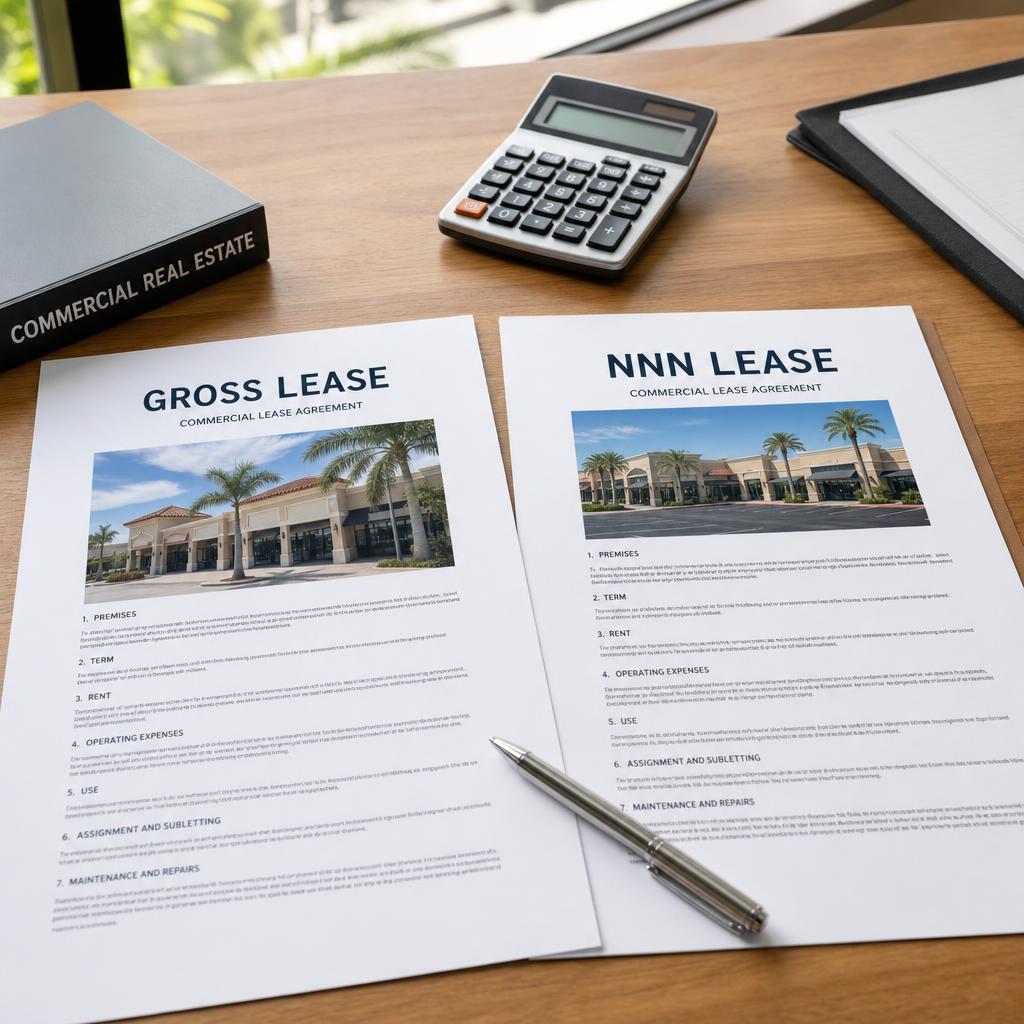
Gross Lease vs. NNN Lease in Commercial Real Estate: Understanding the Key Differences
Learn the key differences between Gross Leases and Triple Net (NNN) Leases in commercial real estate, including how operating expenses are allocated between landlords and tenants.
 Leasing
Modified Gross Lease in Commercial Real Estate
Learn what a Modified Gross Lease is, how it differs from Gross and NNN leases, and why it is commonly used in office, medical, and multi-tenant commercial properties.
Need advisory on a specific property or market?
Speak directly with Lais about your leasing, acquisition, or investment goals in South Florida.
Schedule a Consultation