How Commercial Properties Are Valued: A Complete Guide to Commercial Real Estate Valuation
Learn how commercial properties are valued using the income approach, sales comparison approach, and cost approach, plus key factors like NOI and cap rate.
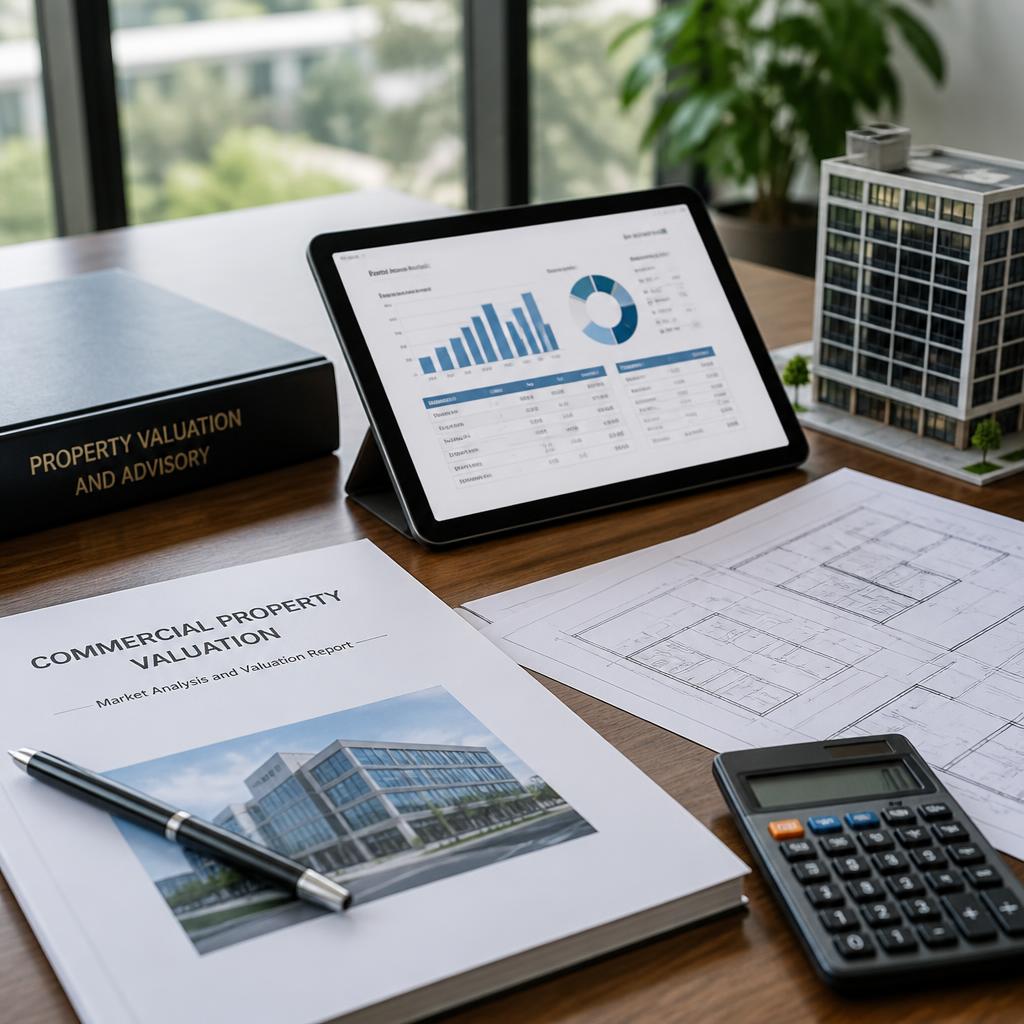
One of the most common questions in Commercial Real Estate is, "How much is a commercial property worth?" Unlike many residential properties, commercial buildings are often evaluated using several different valuation methods, depending on the property's type, occupancy, income potential, and market conditions.
Whether you're looking at a shopping center, office building, restaurant property, warehouse, industrial building, mixed-use development, or medical office, understanding how commercial properties are valued can help you become more familiar with the factors that influence value.
This article explains the most common approaches used to value commercial properties, the factors that affect value, and the terminology frequently used throughout the Commercial Real Estate industry.
What Is Commercial Property Valuation?
Commercial property valuation is the process of estimating the market value of a commercial property by analyzing its physical characteristics, income potential, location, and comparable market data.
Because every commercial property is unique, no single method is used for every situation. Instead, valuation professionals often consider multiple approaches to develop an opinion of value.
The valuation process varies depending on the property's characteristics and the purpose of the valuation.
Factors That Influence Commercial Property Value
Several factors may influence the value of a commercial property.
Common considerations include:
- Property location
- Building size
- Land size
- Property type
- Building age
- Construction quality
- Physical condition
- Occupancy status
- Existing lease agreements
- Rental income
- Operating expenses
- Parking availability
- Accessibility
- Visibility
- Zoning
- Nearby development
- Market demand
The relative importance of each factor varies from one property to another.
The Income Approach
The Income Approach is one of the most commonly discussed valuation methods for income-producing commercial properties.
This approach evaluates a property's ability to generate income through leases and rental operations.
Property types commonly associated with this approach include:
- Office buildings
- Shopping centers
- Retail properties
- Apartment buildings
- Industrial properties
- Warehouses
- Mixed-use developments
The analysis generally considers factors such as rental income, operating expenses, occupancy, and overall income performance.
The Sales Comparison Approach
The Sales Comparison Approach estimates value by comparing a property with similar commercial properties that have recently sold in the same or similar market.
The comparison may include factors such as:
- Property size
- Building age
- Location
- Property condition
- Lot size
- Parking
- Building improvements
- Property use
Because no two commercial properties are identical, adjustments are often made for differences between comparable properties.
The Cost Approach
The Cost Approach estimates value by considering what it may cost to construct a similar building today, while also taking into account depreciation and the value of the underlying land.
This approach may be used for:
- New construction
- Specialized commercial buildings
- Unique facilities
- Limited-market properties
The cost approach is one of several recognized valuation methods and may be more applicable in certain situations than others.
Understanding Net Operating Income (NOI)
One of the most frequently used terms in Commercial Real Estate is Net Operating Income (NOI).
NOI generally represents a property's income after subtracting normal operating expenses, but before financing costs, income taxes, and depreciation.
Because income-producing properties often generate rental revenue, NOI is commonly referenced when discussing commercial property performance.
Understanding Capitalization Rate (Cap Rate)
Another common term is the Capitalization Rate, often referred to as the Cap Rate.
The capitalization rate is a metric frequently used to relate a property's income to its value.
Although the calculation itself is straightforward, capitalization rates can vary significantly depending on factors such as:
- Property type
- Location
- Market conditions
- Tenant profile
- Lease structure
- Building age
- Property condition
Cap rates are commonly discussed when analyzing income-producing commercial properties.
The Importance of Lease Agreements
Existing lease agreements can influence how commercial properties are evaluated.
Information commonly reviewed includes:
- Lease term
- Rental income
- Renewal options
- Occupancy
- Tenant mix
- Rent escalations
- Lease structure
- Expiration dates
For multi-tenant properties, the number and diversity of tenants may also be considered.
Location and Market Conditions
Location is one of the most influential factors in commercial property valuation.
Market participants often evaluate:
- Traffic counts
- Population growth
- Nearby businesses
- Accessibility
- Public transportation
- Major highways
- Economic activity
- Future development
- Neighborhood characteristics
Commercial properties in different markets may experience different levels of demand depending on local conditions.
Building Condition and Physical Characteristics
The physical characteristics of a property also contribute to its overall value.
Examples include:
- Building size
- Ceiling height
- Floor plan
- Parking ratio
- Loading areas
- Accessibility
- Roof condition
- HVAC systems
- Electrical capacity
- Plumbing
- Structural integrity
These characteristics vary depending on the property's intended use.
Property Type Matters
Different commercial property types are often evaluated using similar valuation principles while recognizing their unique characteristics.
Examples include:
- Retail centers
- Shopping centers
- Office buildings
- Medical office buildings
- Industrial properties
- Warehouses
- Restaurants
- Mixed-use developments
- Self-storage facilities
- Hotels
Each property type has operational features that may influence how it is analyzed.
The Role of Due Diligence
Before a commercial property transaction is completed, buyers commonly perform due diligence to better understand the property's condition and available information.
Examples of due diligence materials include:
- Property survey
- Title information
- Environmental reports
- Existing leases
- Building condition reports
- Utility information
- Zoning
- Operating history
- Parking
- Accessibility
The scope of due diligence depends on the property and the transaction.
The Role of a Commercial Real Estate Broker
A knowledgeable Commercial Real Estate Broker can help buyers and sellers understand market activity and evaluate commercial property opportunities.
A broker may assist by:
- Analyzing comparable sales
- Reviewing current market conditions
- Identifying similar commercial properties
- Explaining common valuation terminology
- Coordinating property tours
- Facilitating communication between buyers and sellers
- Assisting throughout the transaction process
Commercial brokers provide valuable market insight while helping clients navigate the buying and selling process.
Final Thoughts
Commercial property valuation is a comprehensive process that considers far more than a building's size or location. Factors such as income potential, comparable sales, construction costs, lease agreements, occupancy, market conditions, and physical characteristics all contribute to understanding a property's market value.
Because every commercial property is unique, valuation methods may differ depending on the property's purpose and characteristics. Learning the basic principles of commercial property valuation helps business owners, investors, tenants, and real estate professionals better understand one of the most important concepts in Commercial Real Estate.
Frequently Asked Questions
How are commercial properties valued?
Commercial properties are commonly evaluated using one or more recognized valuation methods, including the Income Approach, Sales Comparison Approach, and Cost Approach. The method used depends on the property's characteristics and the purpose of the valuation.
What factors influence the value of a commercial property?
Common factors include location, property size, building condition, occupancy, rental income, lease agreements, zoning, parking, accessibility, nearby development, and overall market conditions.
What is the Income Approach?
The Income Approach is a valuation method that analyzes a property's ability to generate income through rental operations. It is commonly associated with income-producing commercial properties.
What is Net Operating Income (NOI)?
Net Operating Income (NOI) generally represents a property's income after subtracting normal operating expenses but before financing costs, income taxes, and depreciation.
What is a capitalization rate?
A capitalization rate, or cap rate, is a metric commonly used in Commercial Real Estate to relate a property's income to its market value. Cap rates vary depending on property type, location, and market conditions.
Why are comparable sales important?
Comparable sales provide market data from recently sold commercial properties with similar characteristics. They are commonly used as part of the Sales Comparison Approach to valuation.
How can a Commercial Real Estate Broker help?
A Commercial Real Estate Broker can help identify comparable properties, explain valuation terminology, analyze market activity, coordinate property tours, facilitate negotiations, and guide clients throughout the commercial buying or selling process.
Authoritative references for this topic
Primary government, regulatory and industry sources readers can consult directly. This article is educational and is not legal, tax, or investment advice.
- Publication 946 — How To Depreciate Property — U.S. Internal Revenue Service
- Uniform Standards of Professional Appraisal Practice (USPAP) — The Appraisal Foundation
- All Appropriate Inquiries for Commercial Property Environmental Due Diligence — U.S. Environmental Protection Agency
- Miami 21 Zoning Code and Zoning Information — City of Miami Planning Department
Lais Same
Lais Same is a commercial real estate broker serving Miami and South Florida, representing property owners, landlords, investors, buyers, and tenants in commercial property sales, leasing, investment transactions, valuation, and market analysis. Learn more about Lais Same or discuss a commercial property.
 Selling
How Do I Sell My Commercial Property? A Step-by-Step Guide for Property Owners
A step-by-step guide for commercial property owners covering valuation, preparation, broker selection, marketing, offers, due diligence, and closing.
 Investment
What Is a 1031 Exchange? A Guide for Commercial Real Estate Investors
A practical guide to 1031 exchanges for commercial real estate investors, including eligible properties, strict deadlines, qualified intermediaries, replacement-property searches, and common mistakes.
 Buying
SBA 504 & SBA 7(a) Financing for Commercial Real Estate: A Guide for Business Owners
A practical comparison of SBA 504 and SBA 7(a) financing for owner-occupied commercial property, including equity, occupancy, eligible uses, and due diligence.
Need advisory on a specific property or market?
Speak directly with Lais about your leasing, acquisition, or investment goals in South Florida.
Schedule a Consultation