Why Commercial Properties Don’t Sell: 8 Common Mistakes Owners Make
Eight common reasons commercial properties in Miami fail to sell, and how owners can diagnose pricing, marketing, lease, document, and strategy problems.
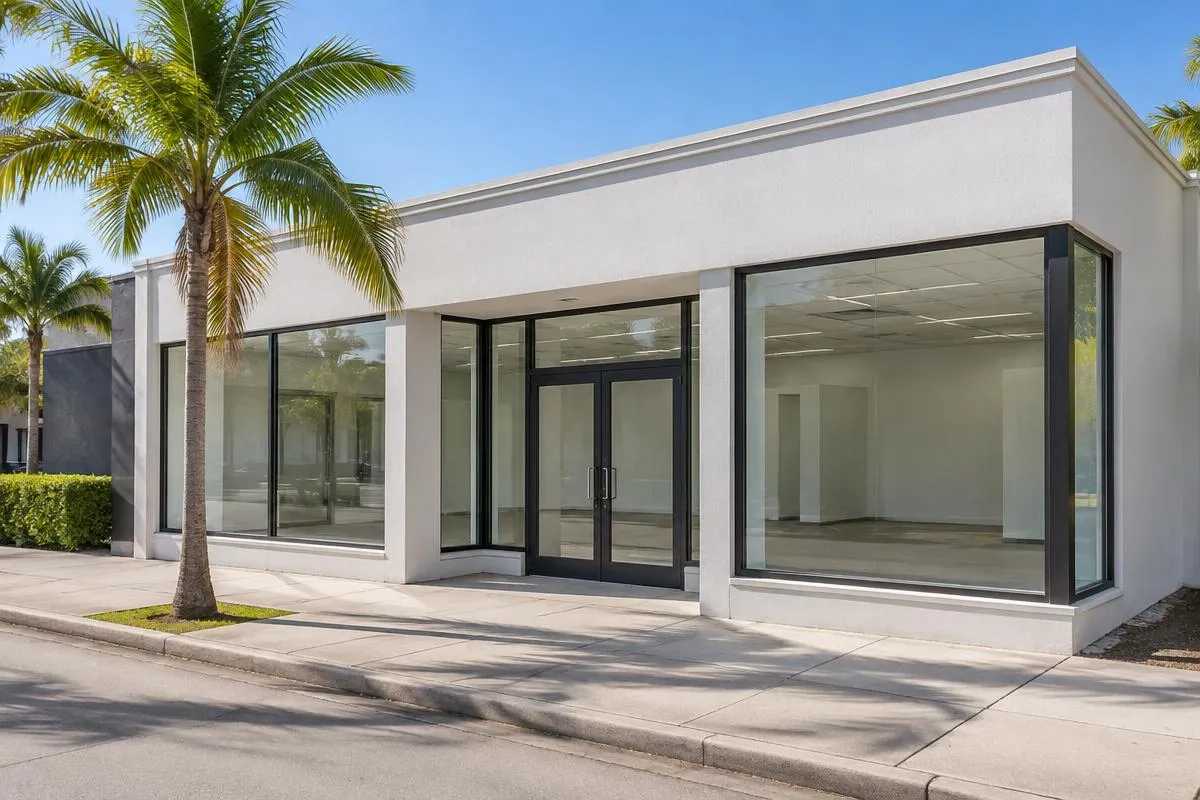
Listing a commercial property for sale in Miami does not guarantee that it will attract qualified buyers or receive acceptable offers. Some properties generate interest shortly after entering the market, while others remain available for extended periods without meaningful progress.
When a commercial property does not sell, owners often assume the market is slow or that buyers are unwilling to pay a reasonable price. Although market conditions influence demand, the problem may also involve pricing, marketing, property presentation, financial documentation, or the terms being offered.
Commercial real estate buyers evaluate properties differently depending on their investment objectives. An investor purchasing a retail shopping center may focus on rental income and lease agreements, while a business owner purchasing a vacant building may prioritize location, accessibility, and the ability to occupy the space.
For property owners in Miami-Dade County, understanding why a commercial listing is not generating results is essential before reducing the asking price or changing the marketing strategy.
Here are eight common mistakes that can prevent commercial properties from selling and what owners can do to address them.
1. Is Your Commercial Property Priced Too High?
Overpricing is one of the most common reasons a commercial property struggles to attract serious buyer interest.
Many property owners determine their asking price based on what they originally paid, how much they have invested in improvements, or the amount they hope to receive from the sale.
However, those figures do not necessarily reflect what buyers are willing to pay in the current market.
Commercial property value is influenced by location, condition, rental income, operating expenses, comparable sales, and the property's potential uses.
For example, two retail buildings along West Flagler Street may have similar square footage but very different investment characteristics.
One may be fully leased with established rental income, while the other has vacant spaces and requires substantial improvements.
Even though the properties are located near each other, they may not support the same price per square foot.
Why asking prices are not the same as market value
Owners sometimes compare their properties with nearby buildings currently advertised for sale.
While active listings provide useful information about competing inventory, they do not establish what buyers have actually paid.
Closed transactions can provide stronger evidence of market pricing when the properties are sufficiently comparable.
For income-producing commercial real estate, investors may also evaluate net operating income and capitalization rates.
Estimated Property Value = Net Operating Income ÷ Capitalization Rate
The appropriate capitalization rate should be supported by relevant market evidence and the property's risk characteristics.
If the asking price is significantly above what comparable sales and financial performance support, qualified buyers may decide not to pursue the opportunity.
Before reducing the price, owners should request a commercial property valuation and market analysis in Miami to determine whether pricing is the primary obstacle.
2. Are You Marketing Your Property to the Wrong Buyers?
A commercial property may fail to sell when its marketing strategy does not reach the buyer category most likely to purchase it.
Commercial real estate is not a single market.
Different property types attract different buyers, and those buyers have different financial objectives.
For example:
- Income-producing retail centers: May attract investors seeking rental income.
- Vacant freestanding buildings: May appeal to owner-users who want to operate their businesses.
- Industrial warehouses: May attract logistics companies, manufacturers, distributors, or investors.
- Multifamily investment properties: Typically attract buyers evaluating rental income and investment performance.
- Commercial land: May appeal to developers, neighboring owners, or investors considering future development.
Consider a vacant commercial building along SW 8th Street in Miami.
If the marketing focuses exclusively on investors, it may overlook business owners who are actively searching for a location to purchase and occupy.
Similarly, advertising an occupied shopping center primarily to owner-users may not reach the investors who are most likely to value its existing income.
How to correct the problem
Before listing, the broker should identify the property's strongest characteristics and likely buyer audience.
The marketing strategy should then be designed around those buyers.
This may include targeted investor outreach, cooperation with commercial brokers, contact with business owners, or advertising through appropriate commercial real estate platforms.
In Miami's bilingual business community, marketing and communication in both English and Spanish may also help reach relevant buyers.
The objective is not simply to generate more inquiries. It is to attract buyers whose requirements align with the property.
3. Does Poor Marketing Make a Commercial Property Harder to Sell?
Yes. Incomplete property information, weak presentation, and limited exposure can make it harder for qualified buyers to recognize a commercial property's value.
A commercial listing should provide enough accurate information for potential buyers to determine whether the property meets their requirements.
Simply advertising the address, square footage, and asking price may not be sufficient.
For income-producing properties, investors often want to understand the rental income, occupancy, lease terms, and operating expenses.
For vacant commercial buildings, buyers may want information about the layout, parking, access, permitted uses, and property condition.
What should a professional commercial listing include?
Depending on the property, marketing materials may include:
- Professional property photographs.
- Accurate building and lot dimensions.
- A clear property description.
- Location information and nearby commercial activity.
- Occupancy and lease information.
- Financial summaries for investment properties.
- Verified zoning and permitted-use information.
- Floor plans, surveys, or site plans when available.
- A defined process for requesting additional information or scheduling showings.
A well-prepared offering memorandum can be particularly useful for investment properties.
However, marketing materials should distinguish verified information from projections.
For example, potential rental income should not be presented as existing rental income.
Likewise, proposed development opportunities should be described as subject to applicable approvals when those approvals have not been obtained.
Professional presentation helps buyers evaluate a property, but it does not replace appropriate pricing or market demand.
4. Can Existing Tenants and Lease Agreements Prevent a Commercial Property From Selling?
Existing tenants can make a commercial property more attractive to investors, but unfavorable lease terms or incomplete tenant information may limit buyer interest.
A fully occupied building is not automatically easier to sell than a vacant property.
Investors evaluate the quality and sustainability of the rental income.
Important considerations include lease expiration dates, renewal options, tenant payment history, operating expense responsibilities, and rental rates compared with the surrounding market.
For example, a retail property with tenants paying below-market rents under long-term leases may offer limited opportunities to increase income.
A buyer may account for those restrictions when determining what to offer.
Similarly, a property with several leases expiring within a short period may present uncertainty about future occupancy.
Why lease documentation matters
Buyers often request executed lease agreements, amendments, rent rolls, and tenant estoppel certificates during due diligence.
If the information provided is inconsistent or incomplete, buyers may have difficulty verifying the property's income.
Some leases may also contain purchase options, rights of first refusal, or other provisions affecting a sale.
Owners should review these agreements before marketing the property.
If your building has vacant units or leases approaching expiration, it may be worth evaluating a commercial leasing strategy for Miami property owners before deciding how to sell.
However, signing a new lease immediately before listing is not always beneficial. A long-term lease could reduce flexibility for buyers who want to occupy the building.
5. Are Missing Financial Documents Causing Buyers to Walk Away?
Missing or inconsistent financial records can delay due diligence, reduce buyer confidence, and sometimes prevent a transaction from moving forward.
Commercial investors commonly evaluate properties based on financial performance.
They may request rent rolls, operating statements, lease agreements, expense records, and supporting information before making a final investment decision.
If the owner cannot provide accurate records, buyers may be unable to verify the income used to support the asking price.
What documents should owners prepare?
| Document | Why It Matters |
|---|---|
| Current rent roll | Shows occupancy, rental amounts, and lease expiration dates |
| Executed leases and amendments | Establishes tenant rights and contractual income |
| Operating statements | Shows historical property income and expenses |
| Property tax records | Helps buyers evaluate ownership costs |
| Insurance information | Helps assess operating expenses and coverage |
| CAM reconciliations | Shows how certain operating expenses are allocated and recovered |
| Security deposit records | Helps account for tenant deposits at closing |
| Surveys and property records | Supports physical and legal due diligence |
| Available inspection reports | Helps identify property condition issues |
Not every transaction requires the same documents.
However, owners should prepare the information most relevant to their property before beginning the sales process.
For example, an investor purchasing a fully leased shopping center may require more extensive financial documentation than an owner-user purchasing a vacant building.
Buyers may also request tenant estoppel certificates to confirm specified lease terms.
Organizing these documents early can help reduce uncertainty and make it easier to respond to qualified buyers.
6. Could Property Condition, Zoning, or Unresolved Issues Be Discouraging Buyers?
Yes. Physical deficiencies, zoning limitations, unresolved permits, or other property-related concerns can affect buyer interest and the likelihood of completing a transaction.
Commercial buyers commonly investigate the condition and permitted uses of a property before closing.
For example, a buyer considering a restaurant location may want to understand whether the building can accommodate the intended use and what improvements or approvals may be required.
A buyer evaluating an industrial warehouse may focus on loading access, electrical capacity, ceiling heights, and building condition.
A developer purchasing commercial land may examine zoning, density, setbacks, access, utilities, and other development requirements.
Why Miami zoning must be verified
In the City of Miami, Miami 21 establishes the city's zoning framework.
However, properties in Coral Gables, Hialeah, Doral, other municipalities, or unincorporated Miami-Dade County may be subject to different regulations.
A property owner should not assume that a particular use or development project is permitted without verification.
Similarly, the existence of a previous business at a location does not necessarily establish that a new business can operate there without additional approvals.
How owners can prepare
Before listing, review available information about:
- Building condition and major systems.
- Outstanding code violations.
- Open permits and relevant building records.
- Zoning and permitted uses.
- Environmental concerns where applicable.
- Known maintenance issues.
- Existing surveys and property boundaries.
Not every issue must be corrected before a property can be sold.
Some buyers may be willing to purchase a building that requires renovations or improvements.
The important consideration is whether the property's condition, pricing, and disclosures accurately reflect the opportunity.
For legal or environmental concerns, owners should consult qualified professionals.
7. Are You Rejecting Qualified Offers Because of Unrealistic Expectations?
A commercial property may remain unsold when an owner evaluates offers only by purchase price and overlooks the other terms that determine whether a transaction is likely to close.
Not every offer below the asking price is necessarily unreasonable.
Buyers may account for renovation expenses, financing requirements, lease restrictions, or current investment returns when determining their proposed purchase price.
An offer should be evaluated in relation to market evidence and the complete transaction terms.
What should owners compare?
Important considerations include:
- Purchase price.
- Earnest money deposit.
- Financing contingencies.
- Due diligence period.
- Inspection requirements.
- Proposed closing date.
- Requests for seller concessions.
- Buyer financial qualifications.
- Conditions involving tenants or property improvements.
For example, a buyer offering a higher price but requiring extensive contingencies may present a different level of transaction risk from a buyer offering a slightly lower price with fewer conditions.
Neither offer is automatically better.
Owners should consider the likelihood of closing, expected net proceeds, timing, and the financial implications of the proposed terms.
A commercial real estate broker can help owners evaluate these differences and negotiate terms consistent with their objectives.
8. Is Your Commercial Listing Broker Using the Right Sales Strategy?
A commercial property may struggle to sell when the listing strategy is not adjusted to reflect buyer feedback, market conditions, or the property's competitive position.
Choosing a broker should involve more than selecting the person who suggests the highest asking price or lowest commission.
Commercial transactions require an understanding of property valuation, investment analysis, marketing, buyer qualifications, and negotiations.
A broker should be able to explain how the property will be positioned and which buyers are most likely to purchase it.
What should your broker be doing?
A professional listing strategy should include:
- Establishing a market-supported asking price. Review comparable sales, financial performance, and current competition.
- Identifying the target buyer. Determine whether investors, owner-users, developers, or multiple buyer categories are most relevant.
- Preparing accurate marketing materials. Present the property's characteristics and financial information clearly.
- Promoting the property through appropriate channels. Combine commercial listing exposure with targeted buyer and broker outreach.
- Qualifying prospective buyers. Evaluate their objectives, financial qualifications, and ability to proceed.
- Coordinating property showings. Make the property reasonably accessible while respecting existing tenants and lease requirements.
- Providing regular feedback. Report inquiries, showings, buyer objections, and marketing activity.
- Recommending adjustments when necessary. Reevaluate pricing, presentation, or buyer targeting when supported by market feedback.
If a property has been listed for an extended period without meaningful activity, owners should review the available evidence before deciding what to change.
For example, a property generating inquiries but few showings may have a different problem from one receiving showings but no offers.
A property receiving offers that consistently fall below the asking price may require a closer review of valuation expectations.
The appropriate response depends on identifying the reason buyers are not moving forward.
What Should You Do If Your Commercial Property Has Been Listed but Is Not Selling?
If your commercial property has been on the market without acceptable offers, the next step is to review its pricing, marketing activity, buyer feedback, and property-specific challenges.
A structured review can help identify whether the issue is limited exposure, unrealistic pricing, incomplete information, or a mismatch between the property and its intended buyer audience.
Start by asking your broker how many qualified inquiries and showings the property has generated, what feedback buyers have provided, and how the listing compares with competing properties.
If the property is receiving little attention, the marketing strategy or asking price may need further evaluation.
If buyers are touring the property but not submitting offers, investigate whether the objections relate to condition, layout, income, financing, or other factors.
If offers are being submitted but negotiations repeatedly fail, review whether the asking price and proposed transaction terms align with market expectations.
Mistakes to avoid when a listing is not selling
- Reducing the price without first understanding the cause of weak buyer interest.
- Increasing advertising without improving inaccurate or incomplete property information.
- Ignoring consistent feedback from qualified buyers.
- Changing brokers without reviewing the existing listing agreement.
- Making expensive improvements without evaluating whether buyers will recognize their value.
The objective is to identify the actual obstacle and make informed adjustments.
Frequently Asked Questions
Why is my commercial property not getting any offers?
A lack of offers may result from overpricing, limited marketing exposure, property condition, incomplete financial information, or weak demand from the intended buyer audience. Reviewing comparable sales, inquiry activity, and buyer feedback can help identify the most likely causes. More than one factor may be involved.
How long should a commercial property take to sell in Miami?
There is no single timeline that applies to every commercial property in Miami. The time required depends on the property's price, location, type, condition, buyer demand, financing, and due diligence requirements. Specialized properties and complex investment transactions may require additional time.
Should I lower the asking price if my commercial property is not selling?
A price adjustment may be appropriate when market evidence indicates that the asking price is above what qualified buyers are willing to pay. However, owners should first review the marketing strategy, property presentation, and buyer feedback. Reducing the price without identifying the underlying issue may not solve the problem.
Can a commercial property sell if it has vacant spaces or needs repairs?
Yes. Vacant or physically outdated commercial properties can attract investors, owner-users, or developers, depending on their location and potential uses. Buyers may account for leasing costs, renovations, and other expenses when determining their offers. Accurate pricing and disclosure of relevant property information are important.
Should I change my commercial listing broker if my property is not selling?
Changing brokers may be worth considering if the existing marketing strategy, communication, or representation does not meet your expectations. Before making that decision, review the listing agreement, marketing activity, buyer feedback, and current market conditions. A new broker cannot guarantee a sale, but a different strategy may be appropriate when supported by the property's circumstances.
Is Your Commercial Property in Miami Not Selling?
If your retail building, shopping center, office property, industrial warehouse, multifamily investment, or commercial land has been on the market without acceptable offers, I can help you evaluate its pricing, competitive position, and potential selling strategy.
Contact me for a free commercial property analysis or consultation and learn more about my commercial property sales and listing representation services in Miami.
This article provides general commercial real estate information and does not constitute legal, tax, or financing advice. Property disclosures, contractual obligations, zoning requirements, and financing considerations vary by transaction. Consult a qualified Florida real estate attorney, CPA, or lender regarding your specific circumstances.
Authoritative references for this topic
Primary government, regulatory and industry sources readers can consult directly. This article is educational and is not legal, tax, or investment advice.
- Uniform Standards of Professional Appraisal Practice (USPAP) — The Appraisal Foundation
- Miami 21 Zoning Code and Zoning Information — City of Miami Planning Department
- FEMA Flood Map Service Center — U.S. Federal Emergency Management Agency
- ADA Standards for Accessible Design (Places of Public Accommodation) — U.S. Department of Justice
Lais Same
Lais Same is a commercial real estate broker serving Miami and South Florida, representing property owners, landlords, investors, buyers, and tenants in commercial property sales, leasing, investment transactions, valuation, and market analysis. Learn more about Lais Same or discuss a commercial property.
 Selling
Off-Market vs. Public Listing: Which Gets Miami Owners a Better Result?
How Miami commercial property owners can compare an off-market sale with a public listing for privacy, buyer competition, pricing, and timing.
 Selling
Documents You Need to Sell a Commercial Property: Rent Roll, Leases, Estoppels and More
A checklist of the rent roll, leases, estoppels, financial statements, title, survey, zoning, and inspection records buyers request in a Miami commercial sale.
 Selling
Should I Sell My Commercial Property Vacant or Leased? How It Affects Price
How occupancy affects the selling price of a Miami commercial property, and how owners can compare investor and owner-user demand before listing.
Need advisory on a specific property or market?
Speak directly with Lais about your leasing, acquisition, or investment goals in South Florida.
Schedule a Consultation