How to Price a Commercial Property for Sale Without Leaving Money on the Table
How Miami commercial property owners can set a supportable asking price using comparable sales, income analysis, lease review, and buyer targeting.
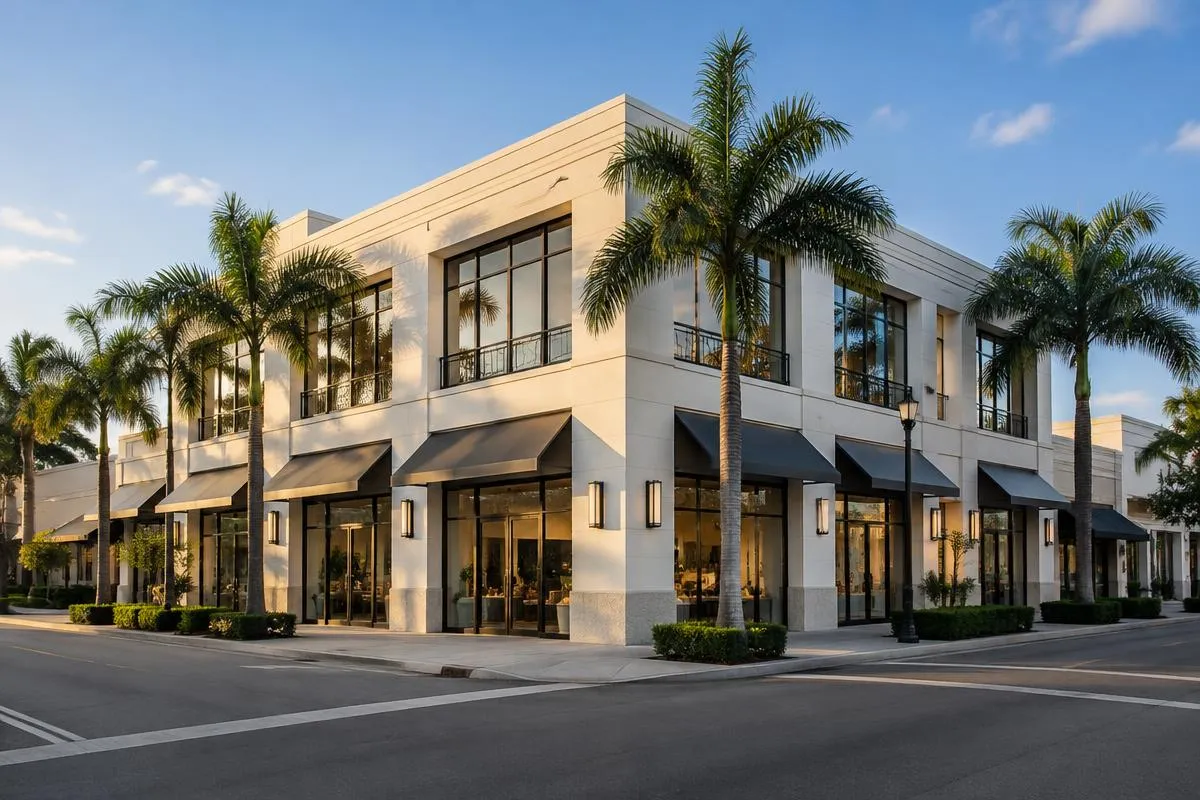
Setting the right asking price is one of the most important decisions a commercial property owner makes before selling. Price your property too high, and you may discourage qualified buyers. Price it too low, and you risk accepting less than the market may be willing to pay.
For commercial property owners in Miami, finding the right price requires more than comparing nearby listings or calculating a price per square foot.
A retail shopping center with established tenants may be valued differently from a vacant office building, an industrial warehouse, or commercial land with redevelopment potential.
Even two properties located on the same street can have significantly different values depending on rental income, lease terms, building condition, zoning, and buyer demand.
The goal is not simply to choose the highest possible asking price. It is to establish a pricing strategy that attracts qualified buyers, supports negotiations, and gives the property a reasonable opportunity to achieve its market value.
As a commercial real estate professional working with property owners and landlords in Miami and South Florida, I believe pricing should begin with a thorough understanding of the property and the buyers most likely to purchase it.
Here is what commercial property owners should understand before deciding how much to ask.
1. How Do You Determine the Right Asking Price for Commercial Property?
The right asking price should be supported by comparable sales, property financial performance, current competition, physical characteristics, and the demand from likely buyers.
Commercial property pricing is different from residential pricing because buyers may evaluate the same property for very different purposes.
An investor may be primarily interested in the income a building produces.
A business owner may value the ability to occupy the property and avoid leasing.
A developer may focus on the site's location, permitted development potential, and acquisition costs.
Because of these differences, there is no single valuation method that works equally well for every commercial property.
What factors influence commercial property value?
The most important considerations generally include:
- Location and surrounding commercial activity.
- Building and land square footage.
- Property condition and required improvements.
- Current occupancy and rental income.
- Lease terms and tenant obligations.
- Operating expenses.
- Comparable property sales.
- Competing properties currently available.
- Zoning and permitted uses.
- Buyer demand and financing conditions.
For example, a retail building along West Flagler Street may appeal to investors seeking rental income and business owners looking for a visible commercial location.
The appropriate pricing strategy depends partly on which buyer category is most likely to recognize the property's value.
A professional commercial property valuation and market analysis can help owners evaluate these factors before listing.
2. Should You Price Commercial Property Based on Comparable Sales or Rental Income?
Commercial property owners should use the valuation methods most relevant to the property's characteristics, rather than relying exclusively on either comparable sales or rental income.
Three commonly used approaches are the sales comparison approach, income approach, and cost approach.
| Valuation Method | How It Works | Common Applications |
|---|---|---|
| Sales comparison | Evaluates prices paid for comparable properties, with appropriate adjustments | Vacant buildings, owner-user properties, land, and investment properties |
| Income approach | Evaluates income-generating potential and investment returns | Leased retail, office, industrial, and multifamily properties |
| Cost approach | Considers land value and the cost of improvements, accounting for depreciation and other factors | Certain special-purpose, newer, or less frequently traded properties |
Sales comparison approach
The sales comparison approach evaluates properties that have sold and adjusts for meaningful differences.
For example, when evaluating a vacant commercial building in Miami, I would consider available sales of similar properties in relevant locations.
However, the comparison should account for differences in building condition, size, accessibility, lot configuration, and permitted uses.
A property with superior visibility or a more functional layout may not be directly comparable to another building with the same square footage.
Income approach
For income-producing properties, investors frequently consider net operating income.
Net operating income generally represents property operating revenue minus operating expenses, excluding financing costs, income taxes, and depreciation.
One common valuation calculation is:
Estimated Value = Net Operating Income ÷ Market-Supported Capitalization Rate
The capitalization rate reflects the relationship between a property's income and its value.
For example, consider a hypothetical commercial property generating $120,000 in annual net operating income.
| Illustrative Capitalization Rate | Implied Property Value |
|---|---|
| 5% | $2,400,000 |
| 6% | $2,000,000 |
| 7% | Approximately $1,714,286 |
These figures are mathematical illustrations, not current Miami market capitalization rates or appraisals.
The appropriate capitalization rate must be supported by relevant transactions, property risk, lease characteristics, and market conditions.
A relatively small change in the assumed capitalization rate can produce a substantial difference in the indicated value.
This is why owners should avoid selecting a capitalization rate simply because it produces their desired asking price.
Cost approach
The cost approach can be useful for certain properties where comparable sales or income information is limited.
It considers the value of the land and improvements, including applicable depreciation.
However, the amount an owner spent constructing or improving a property does not necessarily equal its current market value.
3. Why Can Two Commercial Properties With Similar Square Footage Have Different Prices?
Two commercial properties with similar square footage can have very different values because buyers evaluate more than building size.
Consider two hypothetical retail buildings located in the same Miami commercial corridor.
Both contain approximately 5,000 square feet.
The first is fully leased, with tenants paying rents supported by the surrounding market and leases that provide predictable income.
The second is partially vacant, requires substantial improvements, and has uncertainty about future rental income.
Even with similar dimensions, an investor may evaluate these properties differently.
What differences matter most?
- Rental income: Higher sustainable net operating income can support a higher investment valuation, assuming other factors are comparable.
- Lease terms: Long-term leases, renewal options, rent increases, and tenant responsibilities influence future income and flexibility.
- Building condition: Roof, HVAC, electrical, plumbing, and structural issues may affect the buyer's anticipated expenses.
- Location: Visibility, access, surrounding businesses, and proximity to major roads may influence demand.
- Property configuration: A functional building layout may be more valuable to certain owner-users than a building requiring significant modifications.
- Land characteristics: Lot size, shape, access, and development restrictions may affect the property's utility.
- Permitted uses: Zoning and other regulatory requirements can influence what buyers are able to do with the property.
For owners, this means price per square foot should be treated as one analytical tool rather than the sole basis for establishing value.
4. Can Overpricing a Commercial Property Actually Cost You Money?
Yes. Overpricing can reduce qualified buyer interest, extend the marketing period, and create additional ownership costs while the property remains unsold.
Some owners believe that starting with a very high asking price leaves more room for negotiation.
However, buyers often evaluate multiple properties and compare their asking prices with financial performance and available sales evidence.
If a property appears substantially overpriced, qualified buyers may decide not to investigate further.
What happens when a property sits on the market?
An extended marketing period can create several challenges.
Owners may continue paying property taxes, insurance, maintenance, utilities, and debt service.
Vacant properties may also require additional upkeep without generating rental income.
For income-producing properties, lease expirations or tenant changes may alter the financial outlook while the property is being marketed.
Repeated price reductions can also cause buyers to question whether the initial asking price was realistic.
None of these outcomes is inevitable, and a longer marketing period does not automatically mean a property is overpriced.
Specialized commercial properties may naturally have smaller buyer audiences.
However, when pricing is not supported by market evidence, the owner may spend additional time and money without improving the eventual selling result.
A higher asking price is not the same as a higher achievable selling price.
5. Can Pricing a Commercial Property Too Low Leave Money on the Table?
Yes. Pricing a commercial property below a supportable market range can create a risk of accepting less than qualified buyers might otherwise pay.
Some sellers prioritize a fast transaction and intentionally choose an aggressive asking price.
That strategy can be appropriate in certain circumstances, particularly when the owner values speed, certainty, or reduced carrying costs.
However, owners should understand the potential trade-off.
A low asking price does not guarantee that multiple buyers will compete or that the final sales price will increase.
The outcome depends on buyer demand, marketing exposure, property characteristics, and the transaction process.
How do you protect your property's value?
Before accepting an offer, owners should consider:
- Whether the asking price reflects relevant closed sales.
- Whether the property's income and expenses have been accurately evaluated.
- Whether the marketing strategy reaches the appropriate buyers.
- Whether there are alternative buyers with different acquisition objectives.
- Whether the offer includes contingencies or concessions that reduce its value.
- Whether the expected net proceeds meet the owner's objectives.
For example, a vacant freestanding commercial building might appeal to both investors and owner-users.
An owner who markets only to investors could overlook business owners who value the ability to occupy the building.
Similarly, commercial land may attract developers or neighboring property owners who have particular reasons to acquire the site.
A well-developed marketing strategy can help test buyer demand rather than relying on one buyer's opinion of value.
6. How Do Existing Tenants and Lease Agreements Affect Commercial Property Pricing?
Existing tenants can support a property's value by providing rental income, but lease terms can also restrict future income or limit the property's appeal to certain buyers.
For investment properties, the quality of rental income matters as much as the amount.
Buyers may examine:
- Current rental rates compared with the surrounding market.
- Lease commencement and expiration dates.
- Scheduled rental increases.
- Tenant renewal options.
- Operating expense reimbursements.
- Tenant payment history.
- Vacancy and collection losses.
- Landlord maintenance responsibilities.
- Purchase options or rights of first refusal.
- Potential capital improvement requirements.
Why lease expiration dates matter
Consider a retail building where several tenants have leases expiring soon.
A buyer may see an opportunity to renegotiate rental rates, but may also anticipate vacancy, leasing commissions, tenant improvements, or downtime.
By comparison, a property with longer-term leases may provide more predictable income but less flexibility to increase rents or accommodate an owner-user.
Neither situation is automatically better.
The impact depends on the buyer's investment objectives and the specific lease provisions.
Should you lease vacant space before selling?
Leasing a vacant unit before selling may improve income and attract investors.
However, signing a long-term lease could reduce the property's appeal to buyers who want to occupy the space.
Owners should evaluate whether a commercial leasing strategy would strengthen the property's market position before making that decision.
7. How Should Miami Owners Price Vacant Buildings, Commercial Land, and Redevelopment Properties?
Vacant buildings and commercial land should be priced based on relevant comparable sales, physical characteristics, permitted uses, and the value buyers may reasonably assign to their intended use.
Unlike fully leased investment properties, these assets may not have sufficient current income to support an income-based valuation.
Vacant commercial buildings
For vacant retail, office, or industrial buildings, I consider factors such as:
- Building and lot size.
- Location and access.
- Physical condition.
- Parking and loading facilities.
- Property configuration.
- Potential owner-user demand.
- Applicable permitted uses.
- Comparable sales.
A vacant property may be attractive to an owner-user who wants to occupy the building without waiting for an existing lease to expire.
That potential should be considered when identifying comparable transactions and likely buyers.
Commercial land
For commercial land in Miami-Dade County, pricing may require evaluating lot dimensions, access, zoning, utilities, surrounding development, and potential development restrictions.
In the City of Miami, Miami 21 establishes the zoning framework.
Properties in other municipalities or unincorporated Miami-Dade County may be subject to different regulations.
Development potential must be verified with the appropriate authorities and professionals.
For example, a property advertised as suitable for multifamily development should not be assigned a value based on a specific unit count unless the relevant zoning, site conditions, and approval requirements have been appropriately evaluated.
Why buyer type matters
An investor may evaluate commercial land differently from a developer who has a specific project in mind.
A neighboring property owner may also have a strategic interest in purchasing a parcel.
Understanding these potential buyers can help determine whether targeted outreach, public marketing, or a combination of both is appropriate.
8. What Pricing Strategy Should You Use to Attract Buyers Without Undervaluing Your Property?
The most effective pricing strategy is one that establishes a defensible market range, identifies the intended buyer audience, and allows the owner to evaluate offers based on both price and transaction terms.
I recommend the following process before listing a commercial property for sale.
- Review the property's characteristics. Confirm square footage, occupancy, condition, current use, and relevant property information.
- Analyze comparable sales. Focus on transactions that are reasonably comparable in location, property type, condition, and other relevant characteristics.
- Evaluate income and expenses. For investment properties, review leases, rent rolls, operating statements, and sustainable net operating income.
- Assess competing listings. Determine how the property compares with alternatives currently available to buyers.
- Identify the target buyer audience. Consider investors, owner-users, developers, and other relevant purchasers.
- Establish a supportable pricing range. Use available evidence and explain the assumptions behind the valuation.
- Develop a marketing strategy. Position the property to reach qualified buyers through appropriate advertising and targeted outreach.
- Monitor market response. Review inquiries, showings, buyer feedback, and offers to determine whether adjustments are appropriate.
- Evaluate complete offer terms. Compare purchase price, contingencies, deposits, financing, and closing requirements.
- Consider estimated net proceeds. Account for brokerage commissions, closing costs, mortgage payoff, and other applicable financial obligations.
What Pricing Mistakes Should Commercial Property Owners Avoid?
Even experienced property owners can make pricing decisions that reduce buyer interest or create unrealistic expectations.
Here are six mistakes to avoid:
- Pricing based only on the owner's desired proceeds. The amount an owner wants to receive does not necessarily reflect market value.
- Using active listing prices as proof of value. Asking prices are not the same as completed sales.
- Relying exclusively on price per square foot. Income, lease terms, property condition, and buyer demand can create significant differences.
- Using unsupported capitalization rates. An unrealistic rate can produce a misleading valuation.
- Ignoring the intended buyer audience. Investors, owner-users, and developers may evaluate the same property differently.
- Refusing to reassess pricing when market evidence changes. Buyer feedback, competing inventory, and new transactions may justify reviewing the strategy.
The objective is not to choose the highest possible asking price. It is to support a price that reflects the property's value and gives qualified buyers a reason to consider the opportunity.
Frequently Asked Questions
How do I know what my commercial property is worth in Miami?
A commercial property market analysis can evaluate comparable sales, rental income, operating expenses, physical characteristics, location, and current market competition. The appropriate valuation methods depend on whether the property is leased, vacant, owner-occupied, or intended for development. A formal appraisal may be appropriate when an independent valuation is required.
Should I price my commercial property higher to leave room for negotiation?
A modest negotiation margin may be part of a pricing strategy, but an asking price substantially above market-supported value can discourage qualified buyers. The appropriate approach depends on the property's characteristics, competition, and seller objectives. Pricing should remain grounded in market evidence.
Is price per square foot the best way to value commercial real estate?
Price per square foot is useful for comparing certain properties, but it should not be the only valuation method. Income-producing properties may require an analysis of net operating income and capitalization rates. Lease terms, condition, land characteristics, and permitted uses can also affect value.
Should I reduce the price if my commercial property is not selling?
A price adjustment may be appropriate when market evidence and qualified buyer feedback indicate that the asking price is not competitive. However, owners should also review marketing exposure, property presentation, financial documentation, and buyer targeting before making changes.
Can a commercial real estate broker help me determine my property's asking price?
Yes. A commercial real estate broker can prepare a market analysis using relevant comparable sales, property financial information, current competition, and buyer demand. A broker's market analysis is different from a formal appraisal, which may be required for certain financing, legal, or other purposes.
Want to Know What Your Commercial Property Could Sell for in Miami?
If you own a retail building, shopping center, office property, industrial warehouse, multifamily investment, or commercial land in Miami-Dade County, I can help you evaluate its market position and develop a pricing strategy based on relevant market evidence.
Contact me for a free commercial property analysis or consultation to discuss your property's potential value, likely buyer audience, and available selling strategies.
Learn more about my commercial property sales and listing representation services in Miami.
This article provides general commercial real estate information and does not constitute appraisal, legal, tax, or financing advice. Property valuations, capitalization rates, zoning requirements, and market conditions vary by transaction. Consult qualified professionals when an appraisal, legal opinion, tax analysis, or other specialized evaluation is required.
Authoritative references for this topic
Primary government, regulatory and industry sources readers can consult directly. This article is educational and is not legal, tax, or investment advice.
- Publication 946 — How To Depreciate Property — U.S. Internal Revenue Service
- Uniform Standards of Professional Appraisal Practice (USPAP) — The Appraisal Foundation
- Miami 21 Zoning Code and Zoning Information — City of Miami Planning Department
- FEMA Flood Map Service Center — U.S. Federal Emergency Management Agency
Lais Same
Lais Same is a commercial real estate broker serving Miami and South Florida, representing property owners, landlords, investors, buyers, and tenants in commercial property sales, leasing, investment transactions, valuation, and market analysis. Learn more about Lais Same or discuss a commercial property.
 Selling
How I Market a Commercial Property for Sale: Step by Step
The step-by-step process Lais Same uses to evaluate, price, position, market, and close the sale of commercial property in Miami and South Florida.
 Selling
 Commercial Property in Florida: Taxes and Closing Costs Explained
What Florida and Miami-Dade commercial property sellers may pay at closing: documentary stamp taxes, commissions, title costs, prorations, income taxes, and net proceeds.
 Selling
Why Commercial Properties Don’t Sell: 8 Common Mistakes Owners Make
Eight common reasons commercial properties in Miami fail to sell, and how owners can diagnose pricing, marketing, lease, document, and strategy problems.
Need advisory on a specific property or market?
Speak directly with Lais about your leasing, acquisition, or investment goals in South Florida.
Schedule a Consultation