Commercial Lease Checklist: Everything Every Business Owner Should Verify Before Signing a Commercial Lease
A practical checklist for business owners signing a commercial lease — covering rent, lease types, CAM charges, permitted use, renewal options, tenant improvements, and more.
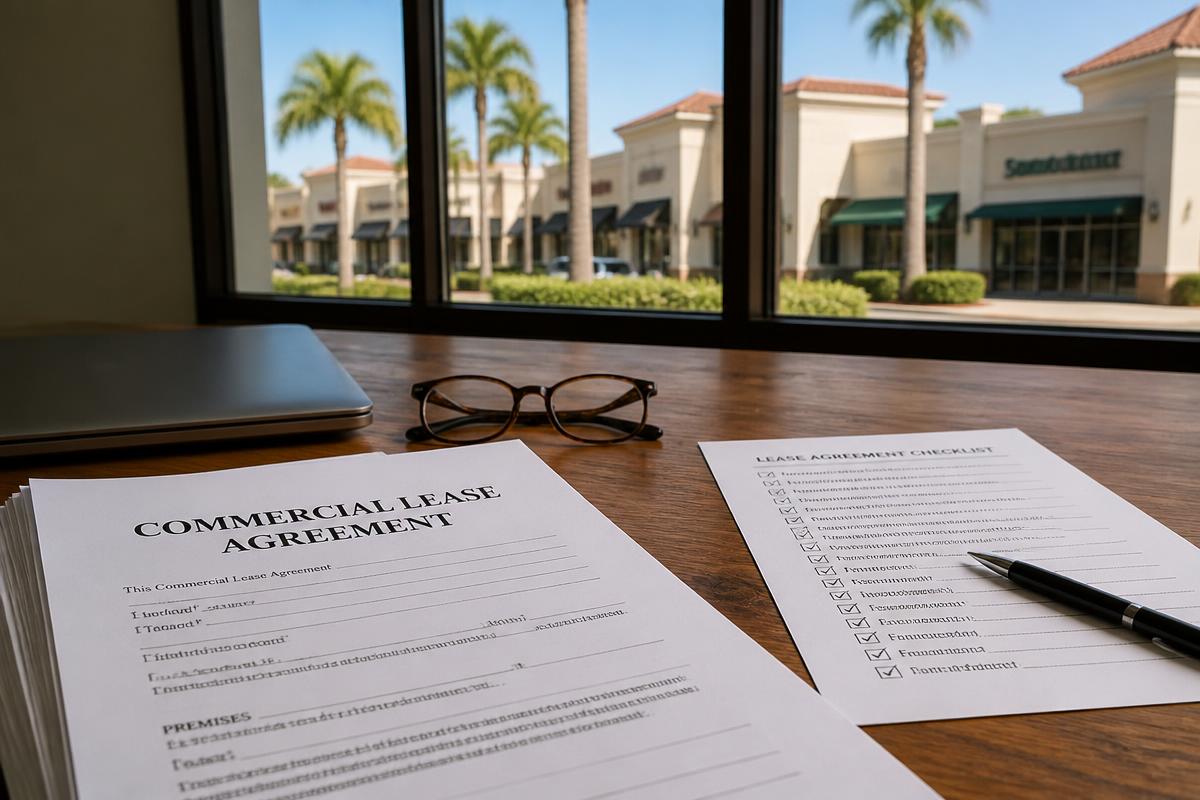
Signing a commercial lease is one of the biggest financial commitments a business owner will make. Whether you're opening a restaurant, retail store, medical office, warehouse, salon, fitness center, or professional office, the lease you sign today can directly impact your business's profitability for years to come.
Unfortunately, many tenants focus almost exclusively on the monthly rent while overlooking dozens of other lease provisions that can cost thousands—or even hundreds of thousands—of dollars over the life of the lease.
A commercial lease is much more than a document that states how much rent you'll pay. It defines your legal rights, financial obligations, operating restrictions, renewal options, and even what happens if your business grows, relocates, or closes.
Before signing any commercial real estate lease, use this checklist to make sure you're protecting your business and avoiding costly mistakes.
- Verify the Base Rent
The first item most tenants review is the base rent—but don't stop there.
Make sure you understand:
The starting monthly rent
Whether the rent is quoted monthly or annually per square foot
When rent payments begin
Whether any free rent period is included
When annual rent increases take effect
Many commercial leases include annual rent escalations ranging from 2% to 4%, while others use fixed dollar increases or Consumer Price Index (CPI) adjustments.
Knowing how your rent changes over time helps you accurately forecast your operating expenses.
- Understand the Type of Commercial Lease
Not all commercial leases are structured the same way.
Before signing, determine whether you're entering into:
Triple Net (NNN) Lease
Gross Lease
Modified Gross Lease
Percentage Lease
Each lease type allocates operating expenses differently.
For example, in a Triple Net Lease, tenants typically pay base rent plus property taxes, insurance, and common area maintenance (CAM). In a Gross Lease, many of those expenses may already be included in the monthly rent.
Understanding the lease structure allows you to compare properties accurately and avoid unexpected costs.
- Review CAM Charges and Additional Expenses
One of the biggest surprises for first-time commercial tenants is the amount of additional expenses beyond base rent.
Ask for a detailed breakdown of:
Common Area Maintenance (CAM)
Property taxes
Property insurance
Administrative fees
Management fees
Utility charges
Trash collection
Landscaping
Parking lot maintenance
Request historical CAM reconciliations whenever possible to understand how these expenses have changed over previous years.
- Confirm the Permitted Use
Never assume your intended business is automatically allowed.
The lease should clearly define your Permitted Use.
For example:
Restaurant
Coffee shop
Medical office
Veterinary clinic
Retail clothing
Professional office
A broad use clause provides flexibility if your business evolves over time, while a narrow use clause may limit future opportunities.
You should also verify local zoning regulations to ensure your business is legally permitted at the property.
- Review the Lease Term and Renewal Options
Your lease term should align with your long-term business goals.
Review:
Initial lease term
Renewal options
Notice deadlines
Future rental rates
Renewal conditions
Having renewal options can protect your business if the location becomes successful and you wish to remain there.
- Negotiate Tenant Improvement (TI) Allowances
Many businesses require renovations before opening.
Depending on the market and the strength of the tenant, landlords may contribute toward build-out costs through a Tenant Improvement (TI) Allowance.
Before signing, clarify:
Dollar amount available
Eligible improvements
Reimbursement process
Construction deadlines
Responsibility for cost overruns
These details should always be documented in the lease.
- Understand Maintenance Responsibilities
Commercial leases often divide maintenance responsibilities between the landlord and tenant.
Determine who is responsible for:
HVAC systems
Roof repairs
Plumbing
Electrical systems
Structural components
Storefront glass
Parking areas
Interior maintenance
Unexpected repair obligations can significantly affect your operating costs.
- Verify Exclusivity Rights
If you're opening a retail business or restaurant, an Exclusive Use Clause may be extremely valuable.
This clause prevents the landlord from leasing another space within the shopping center to a direct competitor.
For example, a sushi restaurant may negotiate protection preventing another sushi concept from opening in the same center.
Exclusivity clauses help protect your investment and reduce direct competition.
- Review Personal Guarantee Requirements
Many landlords require business owners to personally guarantee the lease.
A Personal Guarantee means you're personally responsible for lease obligations if the business cannot fulfill them.
Whenever possible, negotiate:
Limited guarantee periods
Good Guy Guarantees
Burn-off provisions
Financial performance release clauses
Reducing personal liability can provide significant long-term protection.
- Understand Assignment and Sublease Rights
Business plans change.
You may eventually decide to sell your business, relocate, or bring in a new partner.
Review the lease carefully to understand whether you can:
Assign the lease
Sublease the premises
Transfer ownership
Sell the business while maintaining occupancy
Flexible transfer provisions increase the future value of your business.
- Verify Insurance Requirements
Commercial leases typically require specific insurance coverage.
Common requirements include:
General Liability Insurance
Property Insurance
Workers' Compensation
Commercial Auto Insurance (if applicable)
Liquor Liability Insurance for restaurants and bars
Make sure you understand the required coverage limits before signing.
- Read the Default and Termination Clauses Carefully
Every lease should clearly explain what constitutes a default and how it can be cured.
Review:
Grace periods
Late fees
Default notices
Termination rights
Acceleration clauses
Landlord remedies
Understanding these provisions before signing helps avoid unpleasant surprises if business conditions change.
Why Working with a Commercial Real Estate Broker Matters
Commercial leases are often negotiated documents—not standard contracts that must be accepted as written.
An experienced commercial real estate broker understands market conditions, lease structures, tenant protections, and common negotiation strategies.
A broker can help identify hidden costs, negotiate better lease terms, secure tenant improvement allowances, review renewal options, and protect your interests throughout the leasing process.
For most businesses, the right lease negotiation can save tens or even hundreds of thousands of dollars over the life of the agreement.
Final Thoughts
A commercial lease is much more than an agreement to rent space—it's a long-term business contract that can directly influence your company's profitability and future growth.
Taking the time to review rent, CAM charges, maintenance responsibilities, renewal options, permitted use, exclusivity rights, personal guarantees, and insurance requirements can help you avoid costly mistakes and negotiate stronger lease terms.
Whether you're leasing your first commercial property or expanding your business into a new location, approaching the lease process with a detailed checklist will give you greater confidence and put you in a stronger negotiating position.
The most successful business owners don't simply ask, "How much is the rent?"
They ask, "What am I committing to over the next five, ten, or even fifteen years?"
That question can make the difference between a lease that supports your business—and one that limits it.
Frequently Asked Questions
What should I check before signing a commercial lease?
Review the rent, lease type, CAM charges, lease term, renewal options, permitted use, maintenance responsibilities, personal guarantees, insurance requirements, tenant improvement allowances, and default provisions.
What is the most important part of a commercial lease?
There is no single most important clause. Rent, operating expenses, lease term, renewal rights, maintenance obligations, and permitted use all have a significant impact on the overall cost and flexibility of the lease.
Should I negotiate a commercial lease?
Yes. Most commercial leases are negotiable. Business owners can often negotiate rent concessions, free rent, tenant improvement allowances, renewal options, exclusivity clauses, and limitations on personal guarantees.
What is a Triple Net (NNN) lease?
A Triple Net Lease requires the tenant to pay base rent plus property taxes, property insurance, and common area maintenance expenses in addition to the monthly rent.
Do I need a commercial real estate broker when leasing space?
Working with an experienced commercial real estate broker can help you identify hidden costs, negotiate favorable lease terms, and protect your interests throughout the leasing process.
Authoritative references for this topic
Primary government, regulatory and industry sources readers can consult directly. This article is educational and is not legal, tax, or investment advice.
- Miami 21 Zoning Code and Zoning Information — City of Miami Planning Department
- FEMA Flood Map Service Center — U.S. Federal Emergency Management Agency
- Florida Sales Tax on Commercial Real Property Rentals — Florida Department of Revenue
- Real Estate Property Taxes — Miami-Dade County Tax Collector
Lais Same
Lais Same is a commercial real estate broker serving Miami and South Florida, representing property owners, landlords, investors, buyers, and tenants in commercial property sales, leasing, investment transactions, valuation, and market analysis. Learn more about Lais Same or discuss a commercial property.
 Investment
Cash on Cash Return Explained: The Real Metric Smart Commercial Real Estate Investors Use to Measure Profitability
A clear guide to Cash on Cash Return for commercial real estate investors — how it differs from CAP Rate, how to calculate it, and why it matters when financing is involved.
 Leasing
Triple Net Lease (NNN Lease) Explained: What Every Business Owner Should Know Before Signing a Commercial Lease
A clear breakdown of how Triple Net (NNN) leases work — base rent, property taxes, insurance, and CAM — plus the questions every tenant should ask before signing.
 Leasing
How to Lease a Commercial Space in Miami: A Complete Guide for Business Owners
A practical step-by-step guide for business owners leasing commercial space in Miami — from choosing the right location and understanding lease structures to zoning, due diligence, and negotiation.
Need advisory on a specific property or market?
Speak directly with Lais about your leasing, acquisition, or investment goals in South Florida.
Schedule a Consultation